What changes this decision in Australia?
Technical fit, commercial package and legal authority are separate checks. A detector specification helps select equipment; a written quote fixes the package; state rules, land tenure, landholder or tenement consent and protected-area restrictions determine whether and how the site may be searched.
- All three are PI detectors, but their coils, controls, mass and water protection differ materially.
- A DD or salt mode is a test route, not a promise that every conductive site will become quiet.
- Package contents vary; request the exact coil, audio, battery, charger and warranty handler.
SDC 2300 vs GPX 6000 vs Garrett Axiom at a glance
| Decision | SDC 2300 | GPX 6000 | Garrett Axiom |
|---|---|---|---|
| Published mass | 2.3 kg | 2.1 kg | About 1.9 kg with 11-inch coil |
| Search routes | Normal / Salt | Normal / Difficult / Severe | Fine / Normal / Large / Salt |
| Coil route | Fixed 8-inch monoloop | Dedicated mono and DD family | Mono and DD options |
| Water statement | Detector to 3 m | Coils to 1 m; body rain/splash proof | Coil/stem waterproof; box rainproof |
Compare the field job before the badge
These three detectors use pulse-induction approaches but are not interchangeable. SDC 2300 centres on a compact folding body and fixed small monoloop. GPX 6000 combines a low-mass prospecting platform with automatic ground tools and a dedicated coil family. Axiom combines selectable target-ground modes, tracking speeds and mono or DD choices.
Write the search job as a sentence: expected gold size, mineral response, vegetation, salt influence, daily distance, water exposure and operator experience. A comparison without that sentence rewards the longest feature list instead of the detector the operator can keep stable and correctly overlapped.
Ground modes require a controlled test
Minelab publishes Normal and Salt for SDC 2300, and Normal, Difficult and Severe plus DD cancel options for GPX 6000. Garrett publishes Fine, Normal, Large and Salt with selectable Ground Track rates for Axiom. Those names describe intended procedures; they do not create a universal depth ranking.
Use a clean lane, the documented balance or tracking routine, identical reference targets, fixed coil height and two-direction sweeps. Reduce noise before increasing sensitivity. If a model uses a different coil, record that coil as part of the result rather than crediting only the control box.
Mass, leverage and transport change coverage
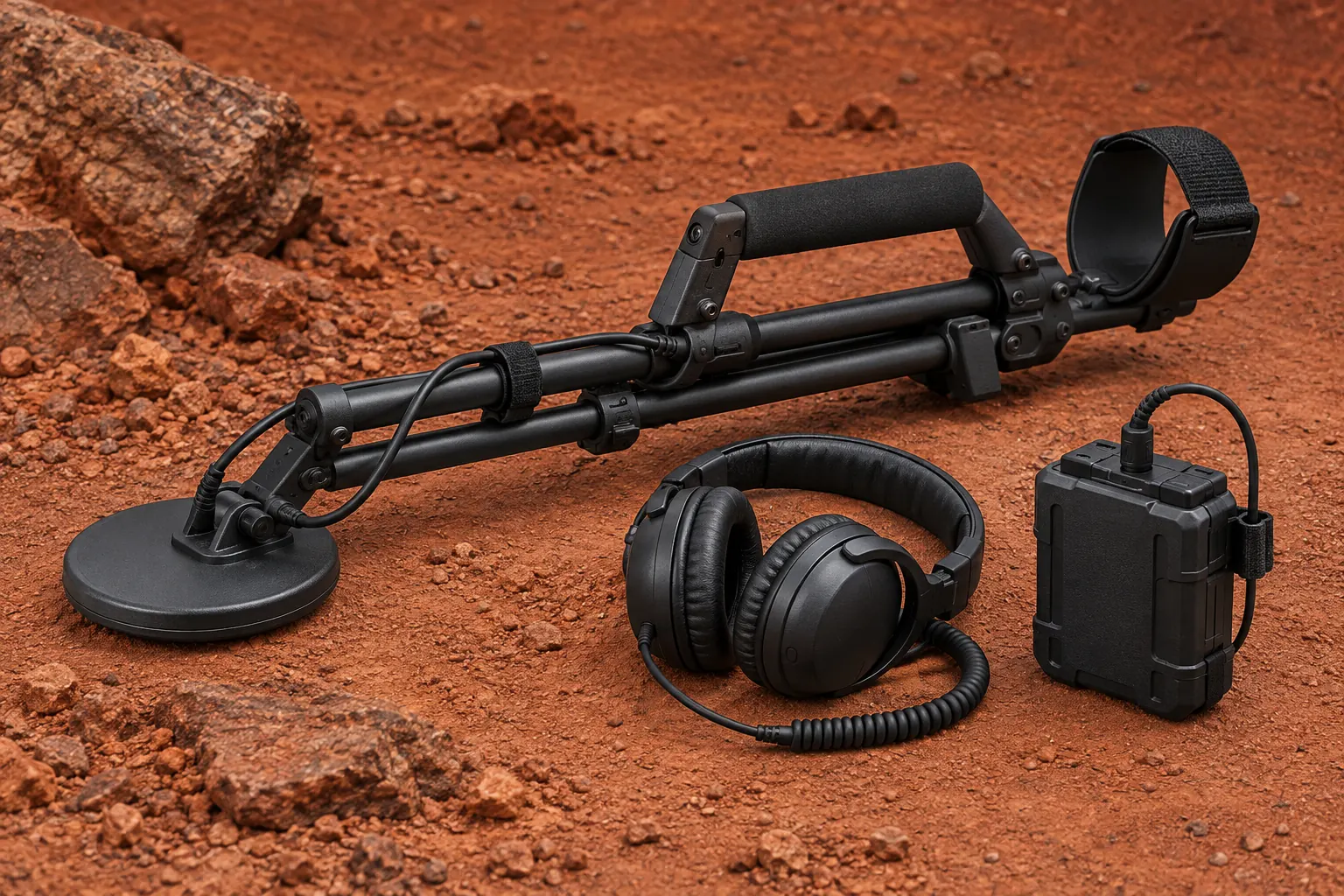
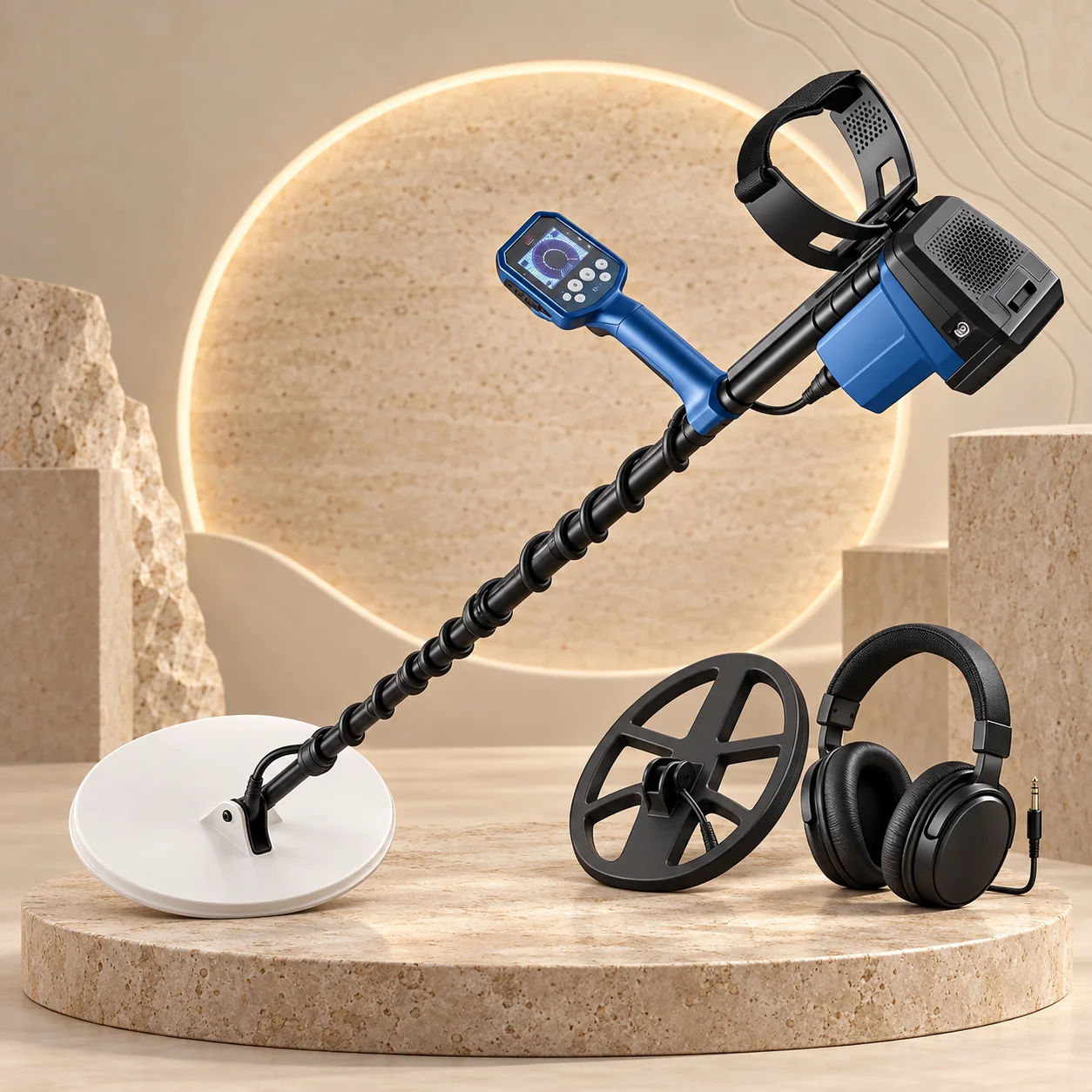
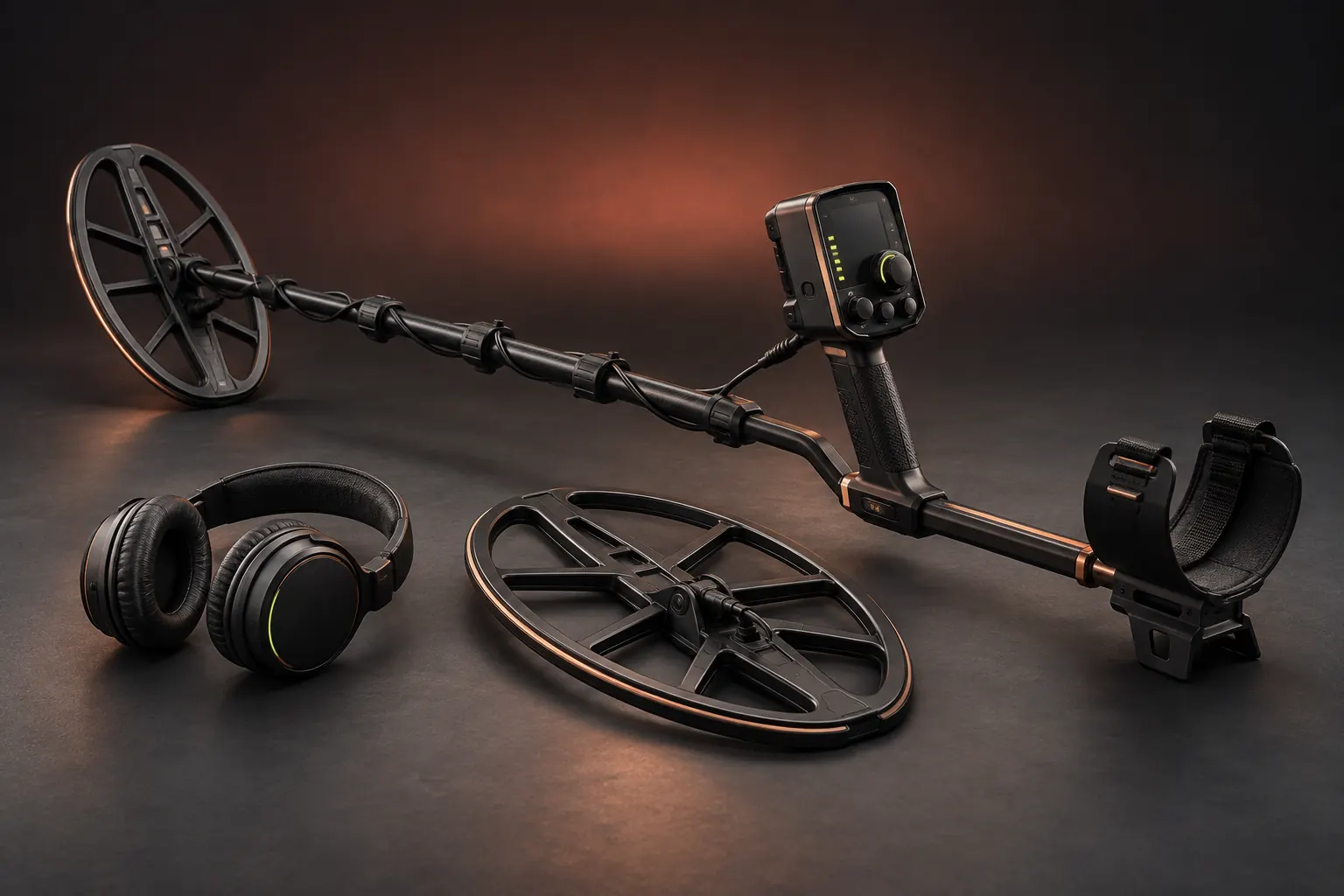
Published mass is only the starting point. Add the quoted coil, headphones, battery, harness, water, recovery gear and communications. SDC folding length can help a pack-in route, while GPX and Axiom offer more coil choice. Coil leverage and shaft balance can matter as much as the headline kilogram figure.
Run a timed grid instead of relying only on a bench test. Record area covered, repeatable targets, false responses and fatigue. A detector that remains controlled over the full session may produce a more complete survey than one that feels most sensitive for five minutes.
Build three comparable quotations
Each quotation should list model and version, every coil, audio system, batteries, chargers, covers, manuals, warranty handler, AUD total, GST position, freight, availability and validity date. Do not compare a Lite package with a fully accessorised competitor or infer stock from a manufacturer page.
Keep the decision conditional: best for this target, this ground and this carry route. State the remaining limitation and first field-test procedure. That record is more useful than declaring one PI detector the permanent winner.
Manufacturer and official authority sources
Checked 2026-09-15. Reopen the current source before relying on a specification, package detail or legal route.
Questions about SDC 2300 vs GPX 6000 vs Garrett Axiom
Which of the three is waterproof?
Minelab publishes SDC 2300 as waterproof to 3 m. GPX 6000 and Axiom publish waterproof coils with weather-protected, not submersible, control boxes.
Does lower published weight guarantee less fatigue?
No. Coil leverage, shaft balance, harness, accessories and session length must be tested as a complete system.
Can Salt mode replace a site test?
No. It is a manufacturer-documented route, but moisture, salt concentration, coil and target class still require testing.