What changes this decision in Australia?
Technical fit, commercial package and legal authority are separate checks. A detector specification helps select equipment; a written quote fixes the package; state rules, land tenure, landholder or tenement consent and protected-area restrictions determine whether and how the site may be searched.
- Ground can change across a few metres and after rain; re-check when the response changes.
- Use the current manual for the exact detector, coil and mode instead of copying a universal setting.
- A quiet setup is not useful if the desired reference target has also been suppressed.
ground balance hot rocks Australian goldfields at a glance
| Observed response | First controlled check | Do not assume |
|---|---|---|
| Noise with stationary coil | Noise cancel, move from EMI, inspect connectors | Every sound is mineralisation |
| Broad response while pumping | Run documented ground balance | Maximum sensitivity is correct |
| One rock repeats | Test rock and known target separately | Audio identifies the material |
| Response after rain or near salt | Use documented conductive-ground route | A dry inland setting transfers unchanged |
Separate EMI, ground response and target response
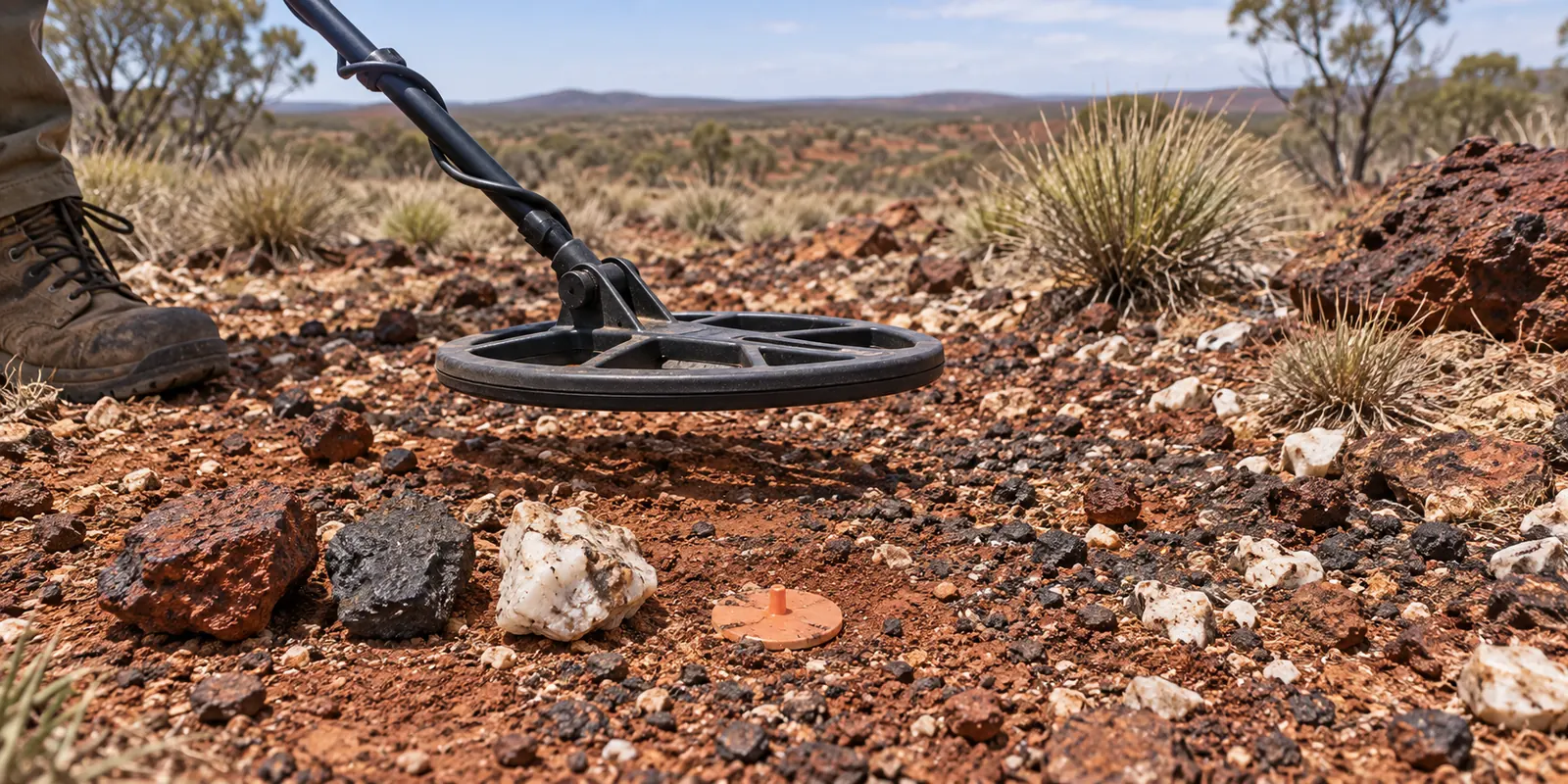
Begin with the coil stationary and away from obvious metal. If noise continues without coil movement, investigate electromagnetic interference, cable movement, connectors, audio equipment and nearby electronics before changing ground settings. Ground response normally relates to controlled coil movement over or toward the soil.
Mark a clean lane and listen from more than one direction. A repeatable compact response is a reason to investigate, not proof of gold. Broad changes following soil colour, moisture or coil height point toward a ground-control problem that should be handled with the exact model manual.
Balance at working height with the intended coil
Fit the exact coil, complete noise cancellation where provided and run the manufacturer ground procedure over target-free ground. Keep the motion controlled and finish at the height used for searching. If tracking is available, understand when it should remain active and when repeated passes may affect a weak response.
Raise sensitivity only after a stable baseline exists. Change one control at a time and write it down. A slightly lower stable setting can support tighter overlap and recognition of subtle repeatable signals; an unstable maximum can slow coverage and create unnecessary recoveries.
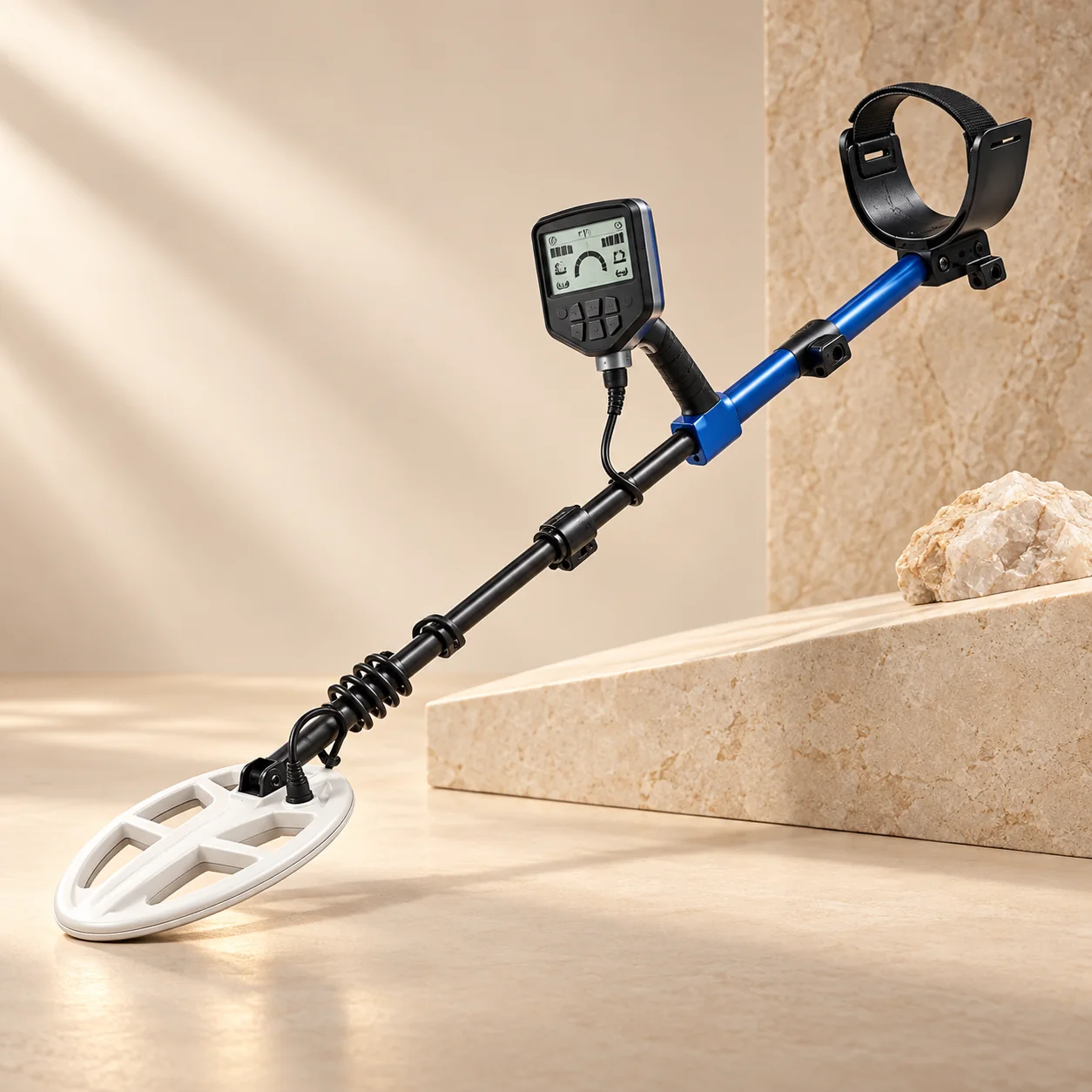
Test hot rocks without losing the target reference
Use lawful ordinary samples and one known non-valuable reference target. Test the rock alone, target alone and both at measured positions. If a control reduces the hot-rock response, repeat the target test from two directions to confirm it remains usable.
Do not balance over an unknown signal. Where negative and positive hot-rock responses differ, record the sound and exact ground procedure rather than assigning a material name from audio. Responsible recovery and visual inspection remain necessary where disturbance is allowed.
Finish with maintenance and a field log
After the session, isolate power, inspect the coil cover and cable, clean without forcing water beyond the published rating, dry connectors and recharge according to the manual. Remove salt residue from waterproof parts using manufacturer care while protecting non-submersible control boxes.
Log detector, coil, mode, sensitivity, noise action, ground action, audio, moisture, hot rocks, reference results and battery use. This turns the next trip into a measured adjustment instead of another search for a universal Australian setting.
Manufacturer and official authority sources
Checked 2026-09-15. Reopen the current source before relying on a specification, package detail or legal route.
Questions about ground balance hot rocks Australian goldfields
Should sensitivity always be at maximum?
No. Use the highest stable setting that preserves controlled overlap and a repeatable desired-target response.
Can audio identify a hot rock with certainty?
No. Audio is evidence to repeat and compare; ground, target orientation and nearby metal can change it.
When should ground balance be repeated?
Repeat the documented procedure when soil, moisture, salt influence, coil or ground response changes materially.