What changes this decision in Australia?
Technical fit, commercial package and legal authority are separate checks. A detector specification helps select equipment; a written quote fixes the package; state rules, land tenure, landholder or tenement consent and protected-area restrictions determine whether and how the site may be searched.
- Fine-target response matters only when the machine is stable enough for the operator to recognise and repeat it.
- A five- or eight-inch coil can improve access and overlap but covers less ground per sweep.
- Hot-rock handling should be tested on actual local samples without teaching the detector to ignore a desired reference target.
best small gold detector Australia at a glance
| Model | Published platform | Small-gold decision point |
|---|---|---|
| GOLD MONSTER 2000 | 12–76 kHz Multi-Au | 1.25 kg and 5-inch DD; compare stability and coverage |
| Goldmaster 24K | 48 kHz VLF | XGB, SAT and Ground Scan; tune against actual mineral response |
| SDC 2300 | MPF pulse induction | 8-inch monoloop and compact fold; no target ID |
| GPX 6000 | GeoSense-PI | Broader coil route and 2.1 kg platform for mobile coverage |
Fine-gold sensitivity is a system, not one frequency number
Higher VLF frequency can improve response to small low-conductive targets, which is why dedicated fine-gold machines are relevant. Yet the signal reaches the operator through coil size, ground balance, threshold or tone, sweep height and local mineral noise. A frequency figure alone cannot describe how confidently a faint response will repeat over red soil or mixed hot rocks.
PI systems take a different route to ground handling. Compact PI such as the SDC 2300 and mobile PI such as the GPX 6000 should be tested for the same reference targets and physical patch. Their target information, coil choices, mass and salt procedures differ. The question is not which technology wins in theory, but which complete setup preserves usable signal-to-ground contrast.
Match the coil to the patch, not the catalogue photograph
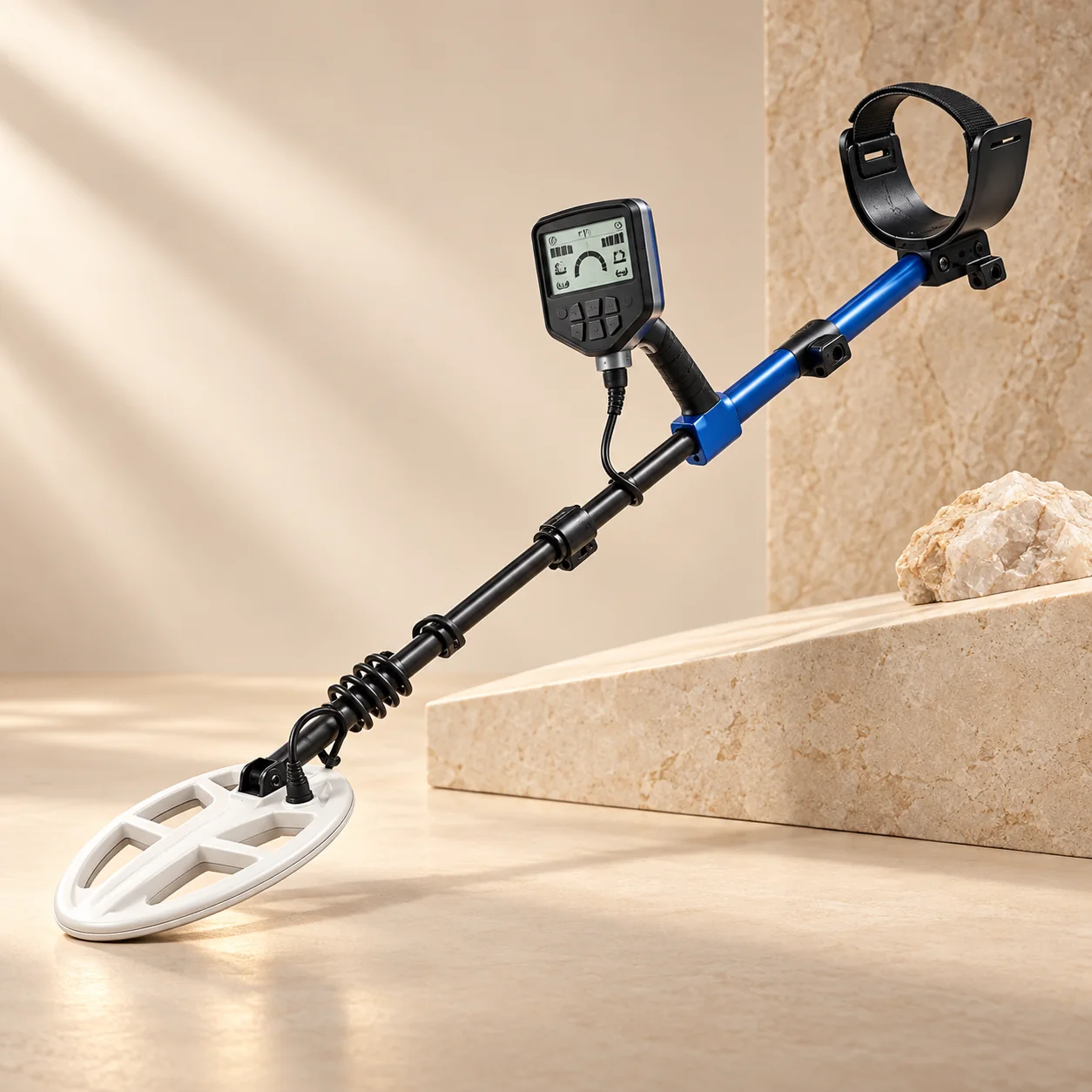
Small coils reach between rocks, around roots and into shallow gullies while making precise overlap easier. They can reduce the number of competing signals under the coil. The penalty is slower area coverage. A larger coil can survey open ground faster and alter response to larger targets, but small-target sensitivity, leverage and scrub access need separate assessment.
Mark a short test lane and measure overlap rather than guessing. Use a repeatable sweep width and keep the coil level through both ends of the arc. Minelab notes that lifting at the end of a swing can create a response. The same disciplined motion should be retained when comparing detectors; otherwise the operator is part of the uncontrolled variable.
Build a hot-rock and ground reference set
Collect only where lawful and use ordinary local samples to understand response. Establish a clean patch, complete the documented ground procedure, then test one rock and one known target separately. If a control reduces the rock response, confirm that the target remains detectable from two directions. Never tune from an unknown signal that may itself be the target of interest.
Record moisture and salt conditions because recent rain can change conductive response. Repeat the comparison when moving into visibly different soil. A setting copied from another field is a starting hypothesis at most. The field note should show the detector, coil, mode, sensitivity, ground action, audio and result.
Audio, target information and fatigue affect recovery rate
GOLD MONSTER 2000 publishes numerical target ID and different tones; Goldmaster 24K includes digital ID and audio choices. The SDC 2300 is a continuous-audio PI without numerical ID. GPX 6000 uses a prospecting audio workflow and automatic ground tools. These interfaces demand different learning, and none can identify gold with certainty before responsible recovery.
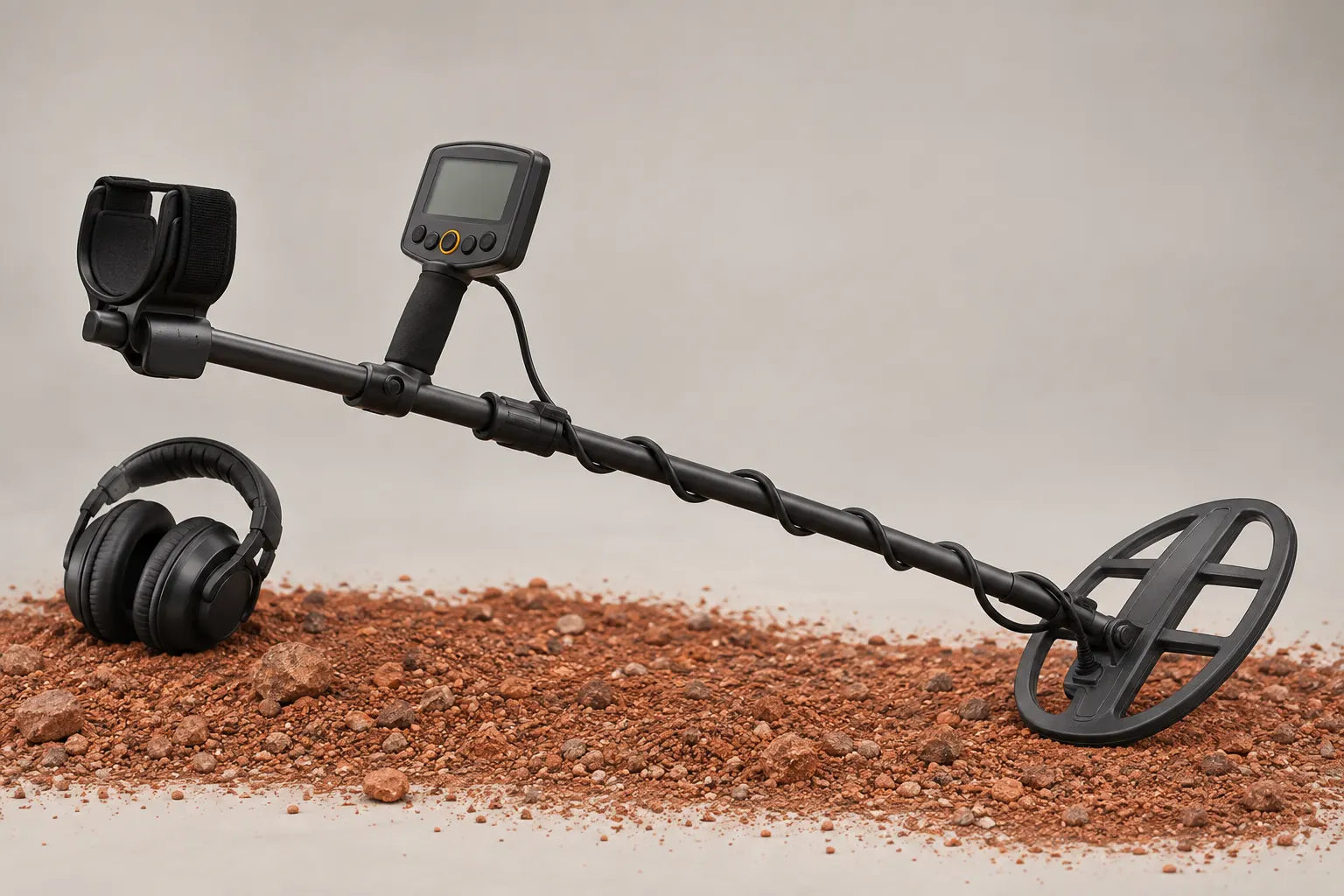
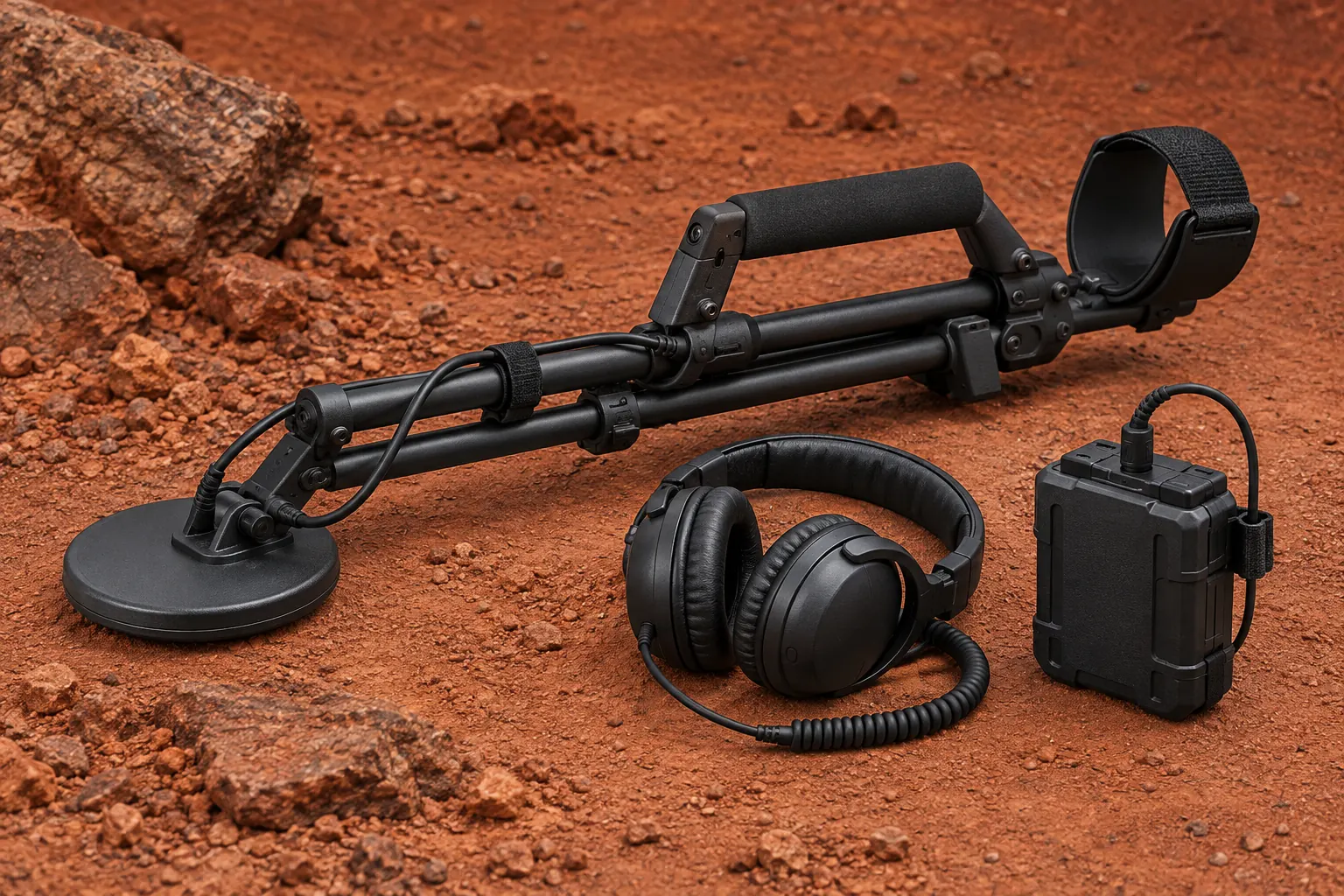
Compare the complete carried mass and how the shaft balances with the quoted coil. Fine-gold work can involve slow repeated passes, so small ergonomic differences accumulate. Include headphones, charging, spare power and weather protection. A short bench session cannot replace several hours of controlled field use.
Request the exact Australian package
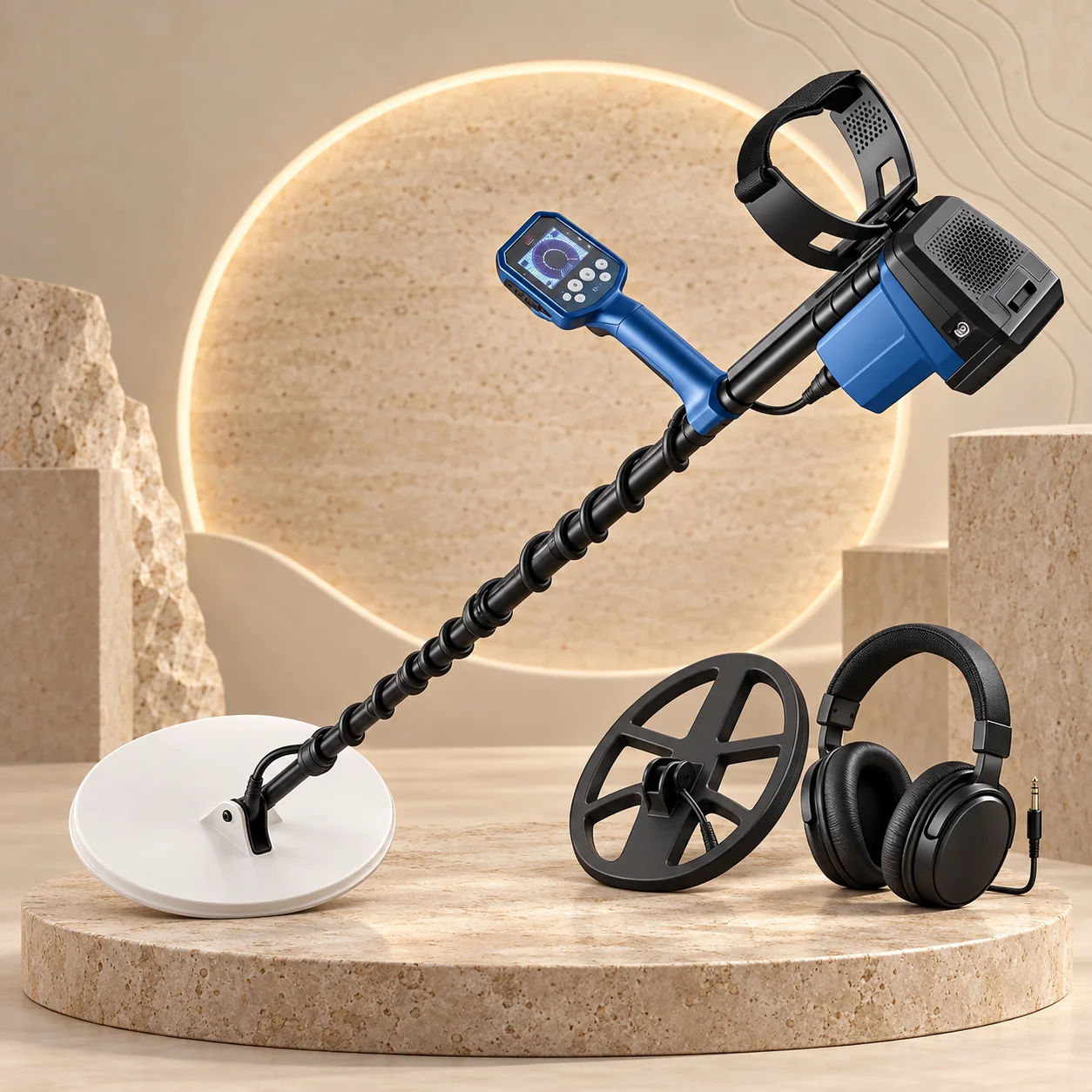
Ask for the exact SKU, coil, headphones, battery, charger, shaft, covers, manual, warranty handler and delivery date. Confirm AUD total, GST position and freight. An illustration or manufacturer page does not prove seller stock, and a product family name does not prove which coil is included.
Define success before payment: stable operation on the intended ground, repeatable response to the target class, sustainable overlap and a support plan for remote travel. Keep limitations beside strengths. That prevents a sensitive specialist from being judged as an all-purpose deep detector or a larger PI from being judged only by a fine-gold bench test.
Manufacturer and official authority sources
Checked 2026-09-15. Reopen the current source before relying on a specification, package detail or legal route.
Questions about best small gold detector Australia
Is the highest frequency always best for small gold?
No. Frequency is one factor; mineralisation, coil, ground procedure, stability and sweep control determine whether a fine response remains usable.
Why use a small coil?
A small coil can improve access and precise overlap around rocks, but it covers less ground and is not automatically best for larger deep targets.
Can target ID prove the signal is gold?
No. Target ID and audio are interpretation aids affected by ground, target size, shape and orientation.